Reconnect. Speak. Thrive.
Your journey home begins here

Today I want to tell you a story. Not a lesson about words or grammar, but a story from my heart. A story about a student who reminded me why I love teaching.
Her name is Akua. But that's not the name her parents gave her.
Akua was born in London. Her father is Ghanaian, from a small village near Kumasi. Her mother is English.
When she was little, her father would try to teach her Twi. Simple things. "Akwaaba." "Medaase." "Me dɔ wo." But life got busy. School, friends, activities. The Twi lessons faded away.
By the time Akua was twenty-five, she could say maybe five words. She knew her name – or so she thought.
You see, her father called her "Akua" because she was born on a Wednesday. But she never knew that's what it meant. She never knew that every Wednesday-born girl in Ghana shares that name. She never knew she was connected to thousands of women she'd never met [citation:4].
When I tell this story, some of you might feel something familiar. That little ache in your chest. That feeling of being almost Ghanaian, but not quite.
I see it in so many of our students.
Akua's grandmother – her nana bea – still lives in Kumasi. She's eighty-two now. She speaks almost no English.
For years, their phone calls went like this:
And then silence.
Akua would hand the phone to her father, and he would do the real talking. She loved her grandmother so much, but she couldn't talk to her. Not really. The words just weren't there [citation:1].
One day, Akua found our website. She signed up for classes, but she was nervous.
On her first day, she told me: "Charlotte, I'm embarrassed. I'm twenty-five years old and I can't even greet my own grandmother properly."
I took her hands and looked her in the eyes.
"Akua," I said, "you are not the first person to feel this way. And you will not be the last. But you are here now. That's what matters."
We started with the basics. Greetings. Family words. Simple sentences.
She struggled at first. Her pronunciation was off. She mixed up wɔfa and agya kakra. She forgot words mid-sentence.
But she kept coming back. Week after week.
And then something beautiful happened [citation:4].
Three months after she started classes, Akua called her grandmother again.
This time, she didn't hand the phone to her father.
She took a deep breath and said:
"Nana, me ho ye. Wo ho te sɛn?"
(Grandma, I'm fine. How are you?)
On the other end, silence.
Then, a small gasp.
Then, her grandmother's voice, cracking with emotion: "Akua? Akua, me ba? Wo kasa Twi?" (Akua? Akua, my child? You speak Twi?)
Akua smiled so wide her cheeks hurt.
"Kakra kakra, nana. Me suaa kakra kakra." (Little by little, Grandma. I learned little by little.)
For the next twenty minutes, they talked. Not perfectly. Akua made mistakes. She had to ask her grandmother to slow down. But they talked. Real talk.
Akua told her about her job. Her grandmother told her about the new mango tree in the yard. Akua asked about her cousins. Her grandmother laughed and said they were all getting too fat.
When the call ended, Akua sat in her London flat and cried.
Happy tears.
A few weeks after that call, Akua came to class with a gift. A small piece of kente cloth.
"Charlotte," she said, "I want to tell you something."
I sat down and listened.
She said: "All my life, I felt like I was missing something. Like there was a part of me I couldn't reach. When I talked to my grandmother in English, it was like we were talking through a glass wall. I could see her, but I couldn't touch her."
She wiped her eyes.
"But when I spoke to her in Twi... the wall disappeared. She wasn't just my grandmother anymore. She was my nana bea. And I wasn't just her granddaughter. I was her me ba – her child."
She looked at me and smiled.
"Charlotte, I didn't just learn a language. I found my way home."
I've been teaching for many years. I've seen hundreds of students come through our classes. And every time, the same thing happens.
The ones who succeed aren't the ones with perfect pronunciation. They aren't the ones who memorize the most words.
They're the ones who have someone waiting for them on the other side.
A grandmother. A grandfather. An auntie. A cousin they've never met. A father who left Ghana before they were born.
Language is not just words. Language is the bridge that connects us to the people we love [citation:2][citation:8].
You know, scholars study this. They have fancy terms for it. "Heritage language maintenance." "Diasporic identity formation." "Linguistic space-making" [citation:5][citation:8].
But here's what it really means:
When you learn your family's language, you're not just learning to say "I love you." You're learning to mean it in the way your grandmother heard it as a child. You're learning to laugh at jokes that don't translate. You're learning to cry in the language your ancestors cried in [citation:4].
A 2024 study called it "mending that wound" – the wound of separation that happens when families migrate and languages get left behind [citation:2].
And you know what? That's exactly right.
I never met Akua's grandmother. But if I could, I would tell her something.
(Grandmother, your child has come home.)
She did the work. She made the calls. She learned the words. And now, thanks to you, the connection is alive again.
That's what we do at Speak Ghana. We don't just teach Twi. We help people find their way back to the people they love.
Maybe you're like Akua. Maybe you have a grandmother waiting for your call. Maybe you have family in Ghana you've never met. Maybe you just want to feel more connected to where you come from.
Wherever you are on this journey, know this: it's never too late.
Akua was twenty-five when she started. I've taught students in their fifties, their sixties, even their seventies. And every single one of them has cried happy tears when they finally had a real conversation with someone they love.
That's what we're here for.
In Twi, we have a saying: "Ɔbaakofo nnya abusua." A single person does not build a family.
You are not alone on this journey. We are here to walk with you. Your family is waiting for you. And the ancestors? They're cheering you on.
So take a deep breath. Pick up the phone. Say one word. Just one.
(Grandmother, I love you.)
That one word might just change everything.
Join our classes and start your journey today.
Explore Our Classes → Get Free Resources →Medaase pa for reading. And if you have a grandmother waiting for your call... call her today.
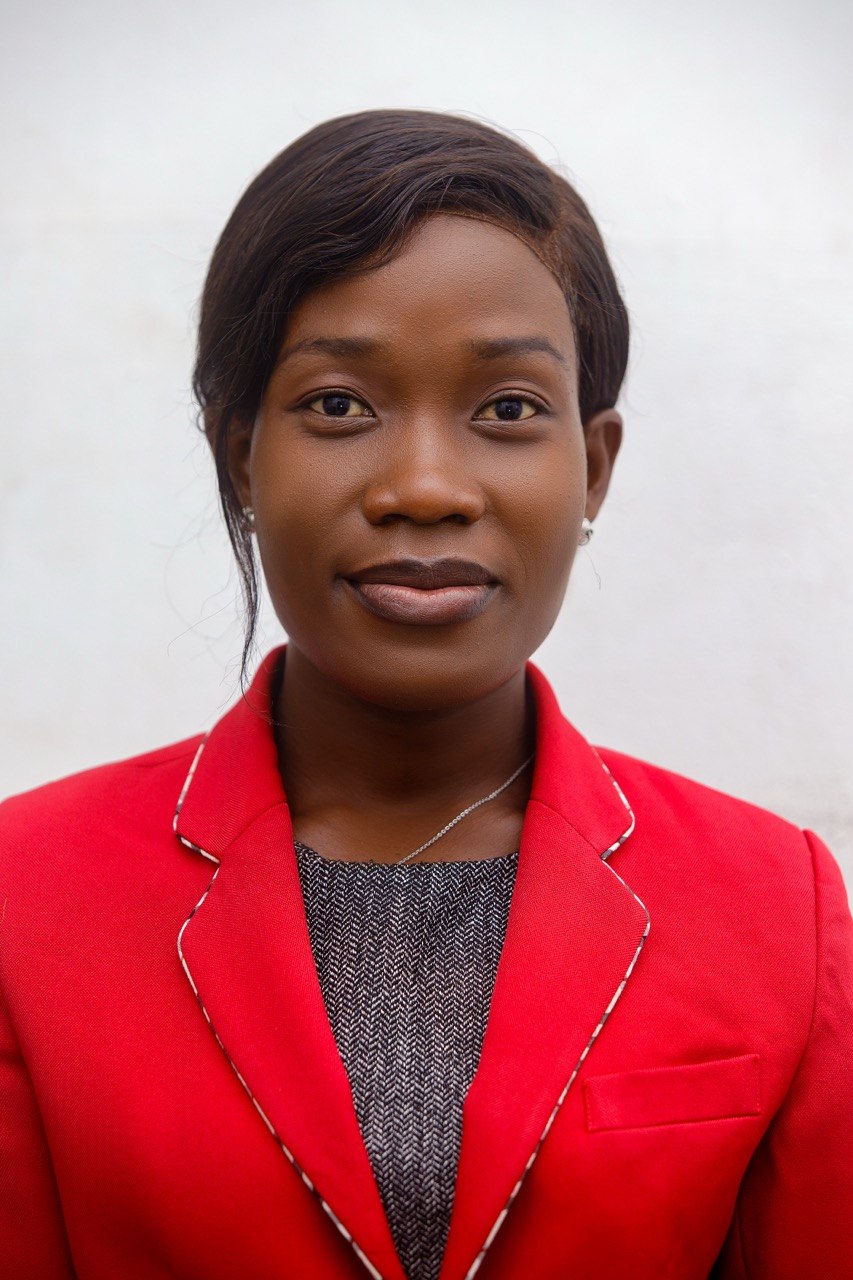
Charlotte Tetebea Asiamah
Senior Twi Instructor, Speak Ghana
P.S. Akua came to Ghana last year. She met her grandmother face to face for the first time since she was a baby. She sent me a photo. They're both smiling so wide, I can hardly see their eyes. That photo is on my desk right now. It reminds me why I teach. 🇬🇭